
Smugglers
The Hawkhurst Gang
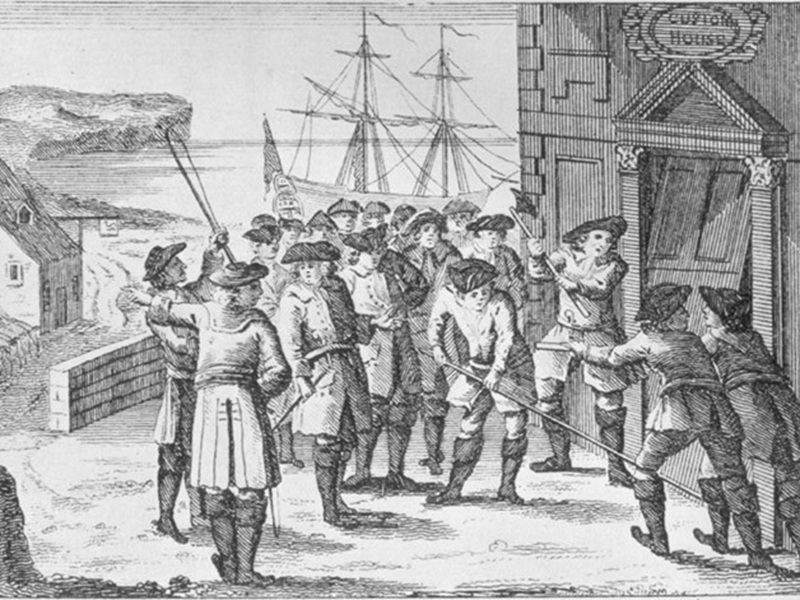
Hawkhurst Gang
It is worth exploring the history of the Hawkhurst Gang to expose the reality of smugglers as hard, cut-throat villains. This image has been romanticised in the public imagination by centuries of writers such as Kipling, and the Dr Syn stories of Russell Thorndike. While some locals, who dabbled in a bit of smuggling to support a meagre income, may have been fairly harmless, smuggling became an increasingly serious concern as the centuries when went on. The Hawkhurst Gang is one of a number of smuggling gangs who operated in a way similar to modern day drug cartels. In the eighteenth century, force and violence were a part of most smuggling runs.
The Hawkhurst Gang originated in East Sussex and Kent but started to make themselves felt in West Sussex and Hampshire as their power and notoriety increased. Alongside enormous success and their growing power, the Hawkhurst Gang were increasingly known for a series of violent activity, including:
- the murder of Thomas Carswell, a Customs Riding Officer
- the shooting and killing of a Royal Dragoon at Goring, W. Sussex
- breaking into the Customs House at Poole to recover seized contraband
- the kidnap and murder of a customs officer, William Galley and informer, Daniel Chater, at Rowlands Castle.
- the murder of a thirteen-year-old boy, Richard Hawkins, accused of seizing contraband.
The murder of Richard Hawkins, alongside the brutal killings of Galley and Chater were so shocking that it heralded the end for the Hawkhurst Gang. Such ‘diabolical crimes’ as described by the Dean of Chichester Cathedral, alienated the local population who had hitherto refused to inform on the smugglers. Now, they were prepared to share what they knew and take a share in the £2,000 reward on offer (approx. £400,000 in today’s money).
Ultimately, seven smugglers from the Hawkhurst gang were hanged on The Broyle in Chichester following the trial held in the Guildhall in Chichester (now in Priory Park).
Alexandra Wright, July 2026
Murder in Rowlands Castle
How two brutal murders destroyed Britain’s most dangerous smuggling gang
In October 1747, an event took place which was to have devastating repercussions and would change smuggling in Sussex forever.
The notorious Hawkhurst Gang pulled off an audacious heist: breaking open the Customs House in Poole to steal back tons of smuggled tea which had been seized by Customs officers from a small gang of Chichester smugglers. Too small to act alone, this local gang hired the Hawkhurst gang to help them.
There is something about the word ‘heist’ which appeals to the British imagination. This was true in 1747 when crippling taxes were levied to pay for George II’s wars and only limited rights for the poor existed. The Hawkhurst Gang carried off the heist at Poole Customs House with dramatic success and were fêted through the streets, with the local population cheering them all the way. Among the crowd stood Daniel Chater, a young shoemaker. Fatefully, he recognised one of the Chichester smugglers as John Diamond, a man he had worked with during harvesting. He greeted him as he went past and in return, the smuggler handed him a bag of tea. This act would seal Chater’s fate: their interaction alerted the authorities investigating the raid.
In February 1748, William Galley, a local officer, was sent by the customs service to take Chater to Chichester where he would give a statement to Major Battine, Surveyor General for Sussex and a local Justice of the Peace. Galley and Chater broke their journey at the White Hart pub in Rowlands Castle. They had no idea that this inn was frequented by local smugglers – including the two sons on of the landlady, Elizabeth Payne. As the two men sat and drank, Elizabeth, overhearing their conversation, became convinced that they were informants or anti-smuggling agents. Fearful of the threat this posed to her two sons and their associates, she called on her boys to deal with the two men, setting in motion a fearful, cruel ordeal which would end in an infamous murder.
Other members of the smuggling gang were summoned and Galley and Chater were plied with drink in an attempt to get them to talk. When they finally fell asleep, the brothers found the letter that Galley was carrying for the judge, revealing Chater to be an informer and Galley to be a customs officer. The issue the smugglers had at this point was what to do with them? It was not uncommon practice for smuggling gangs to put their enemies onto ships bound for France, sometimes even selling men to slave galleys. But the concern now was that they might return and give evidence. In the end the action was messy and cruel, born out of uncertainty and indecision.
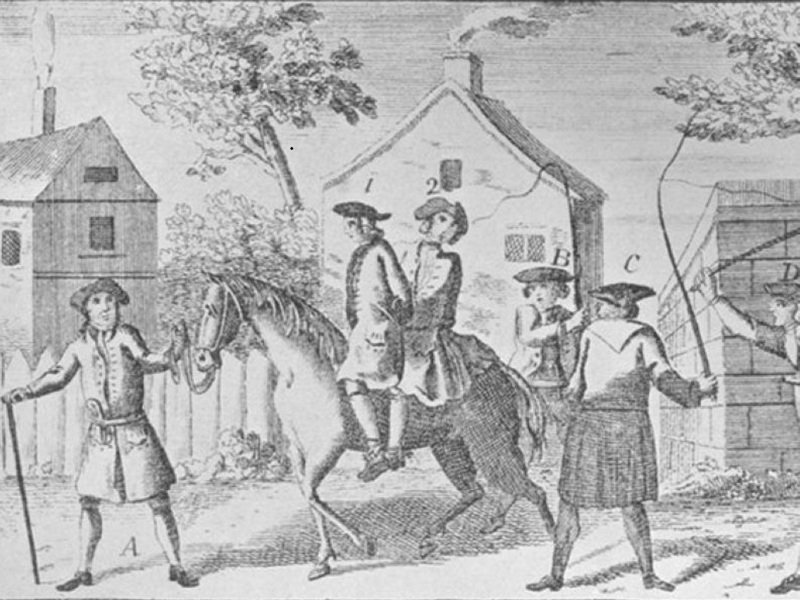
Hawkhurst Gang Kidnap Chater And Galley At Rowlands Castle
Galley and Chater were beaten and whipped, then abducted from the pub, tied underneath their horses and whipped for a mile – to Woodash and then to Dene. This long, drawn out ‘execution’ was intended to ensure that every member of the gang was involved in the murder to avoid anyone turning informant to save themselves from hanging.
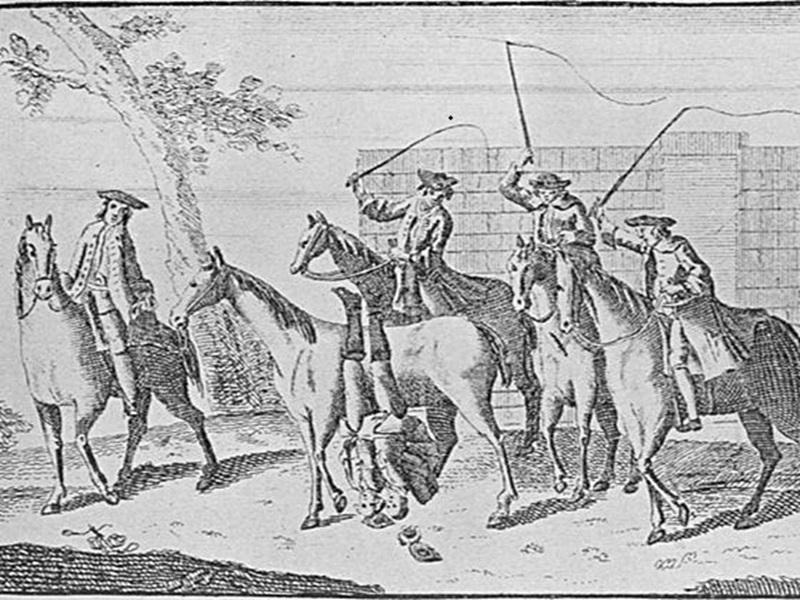
Galley And Chater Falling Off Their Horses
During the ‘execution’ of Galley, he fell from his horse. Believing he had broken his neck from the fall, the gang buried him in an old fox’s den. However, when his body was found, there were signs which suggested he had been buried alive, adding to the revulsion people felt about the crime. Chater lasted a little longer, finally being taken to Harris’ s Well in Lady Holt Park, the gang still whipping him all the way.
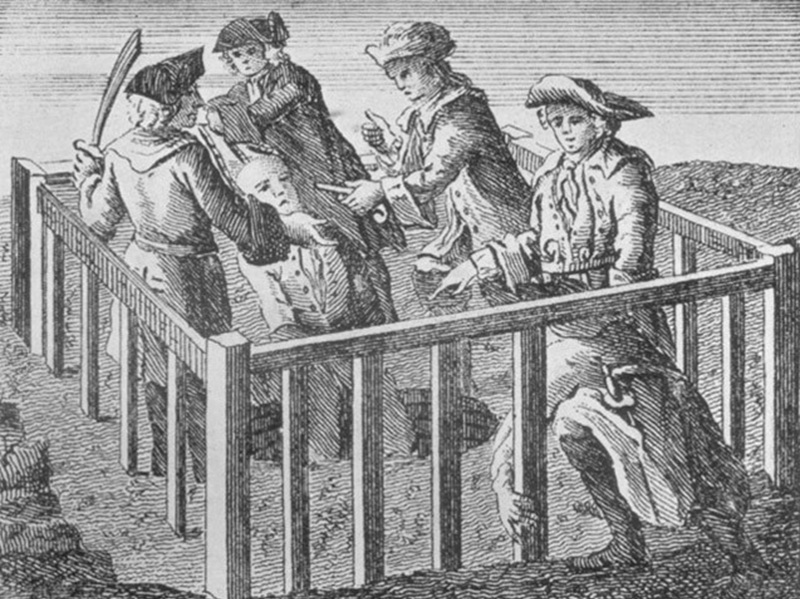
Chater Hanging In The Well
At the well, the men discussed how best to kill Chater. The issue was to find a way where all were culpable. They also needed to make an example of him as a warning to other potential informers. After much deliberation, the men tied a rope around his neck and pushed him into the well, intending to drown him. Chater grabbed the sides and hung there for a quarter of an hour in a desperate fight to live.
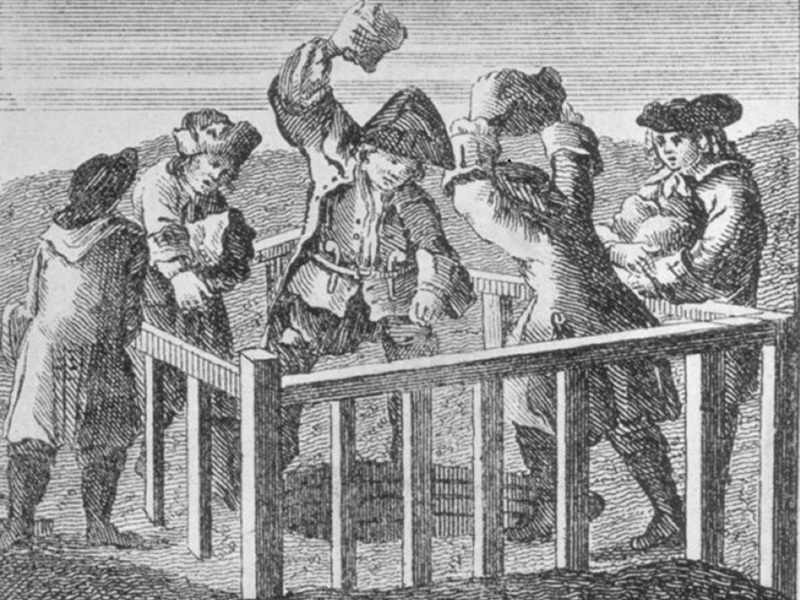
Smugglers Flinging Down Stones
The men threw stones and logs down the well until his cries finally stopped and they knew he was dead.
The murder was soon discovered: Galley’s blood-stained coat was found on the road and an anonymous tip-off led to his body being found in a shallow grave. The murders were reported in the newspapers, turning the crime into a national scandal. This ugly murder went far beyond the violence that had previously been tolerated from smuggling gangs. One man who stepped up as a result of the murders was Charles Lennox, the 2nd Duke of Richmond. Both the raid on the Customs House in Poole and the murders had been planned or taken place on his land. Driven by this knowledge, the Duke dedicated himself to eradicating smuggling in Sussex. Ultimately, by 1749, it was the actions of the Duke of Richmond that brought an end to the Hawkhurst Gang.
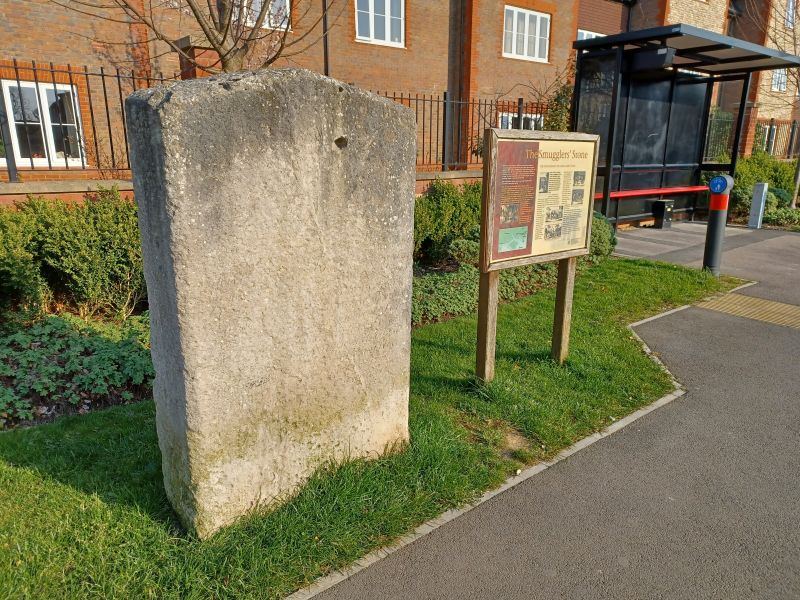
The Smugglers’ Stone, Chichester,
Simon Burchell 2022
The trial took place at a special assizes in the Chichester Guildhall, now located in Priory Park. The leaders, Arthur Grey, Thomas Carey and Thomas Kingsmill were found guilty and hanged in January 1749 on the Broyle, an open common just outside of the city. Their bodies were hung in chains as a deterrent and warning to others. For years the site of this execution was marked by the ‘Smugglers’ Stone’ just outside the walls of the former Rousillion Barracks on Broyle Road. The inscription, worn away by centuries, reads:
“As a memorial to posterity and a warning to this and succeeding generations, this stone is erected AD1749.”
Alexandra Wright. July 2026
Acknowledgements and further reading
Chatterton, E. Keble, King’s Cutters and Smugglers 1700-1855 (1912)
Dragovich, Joseph, ‘Hawkhurst’(2023)