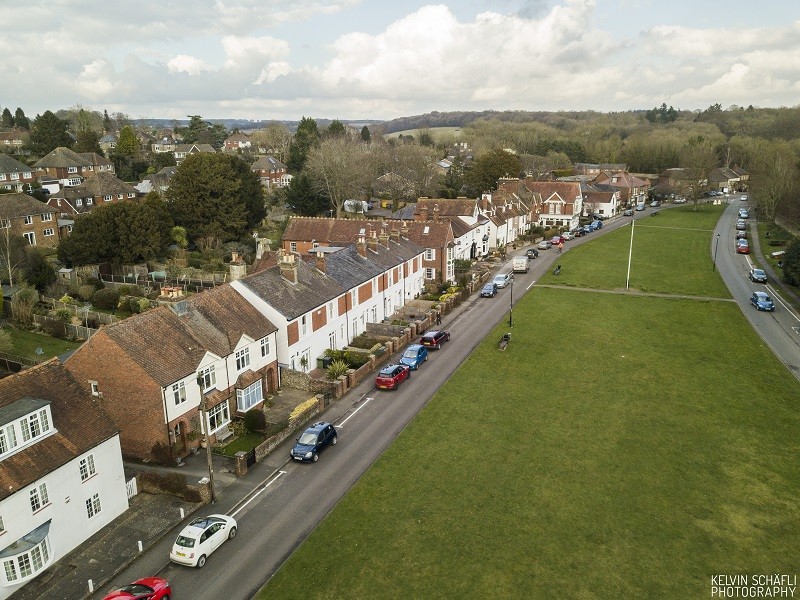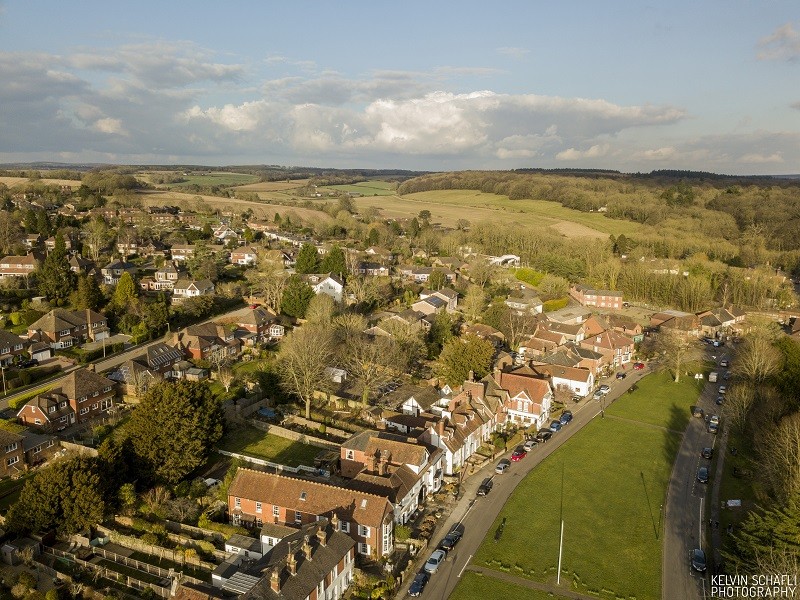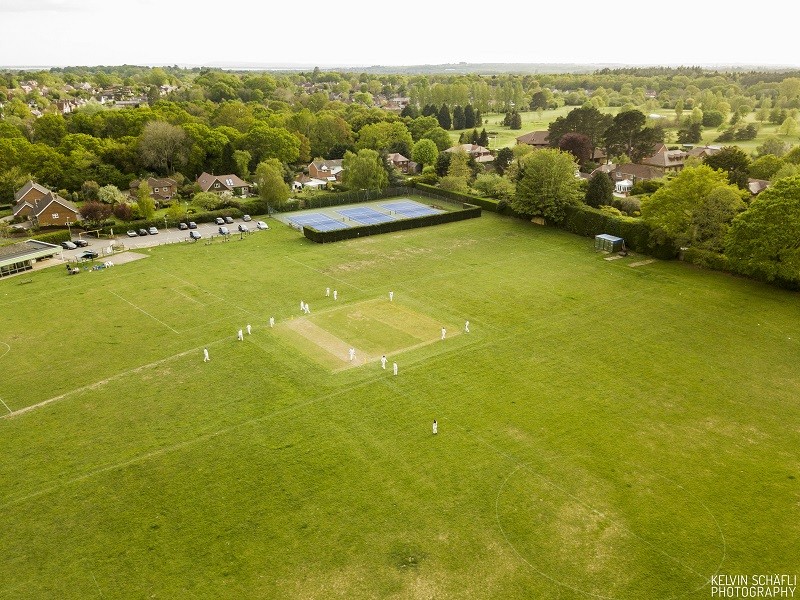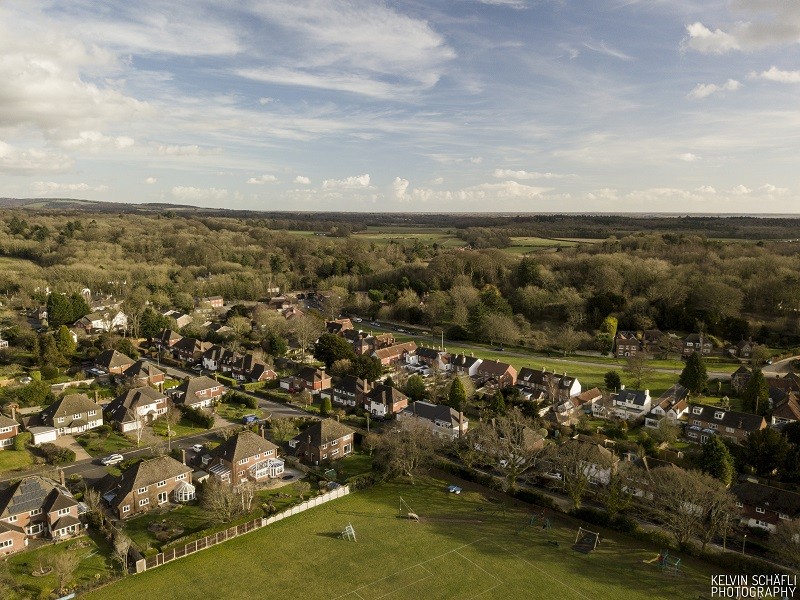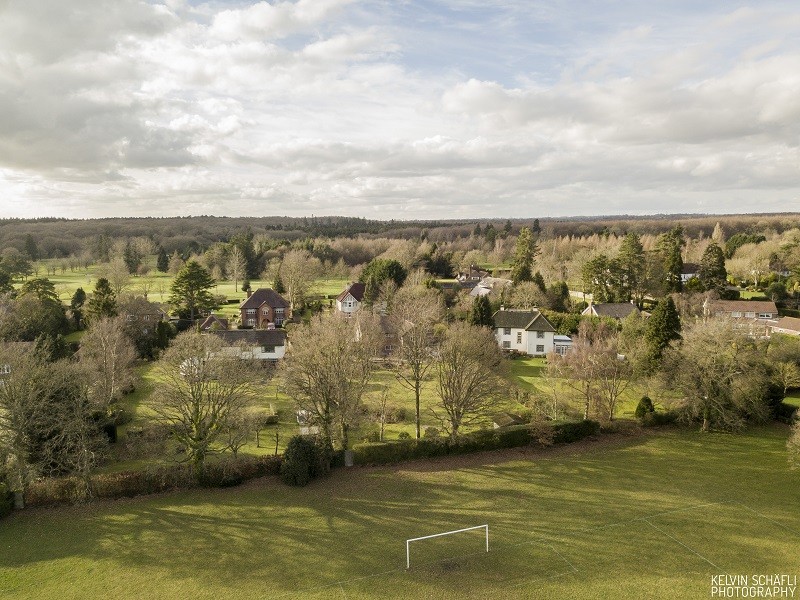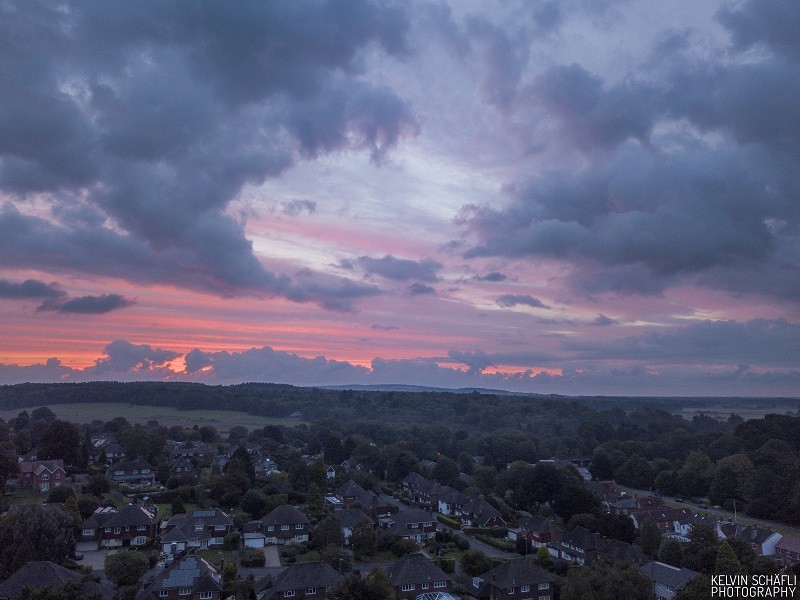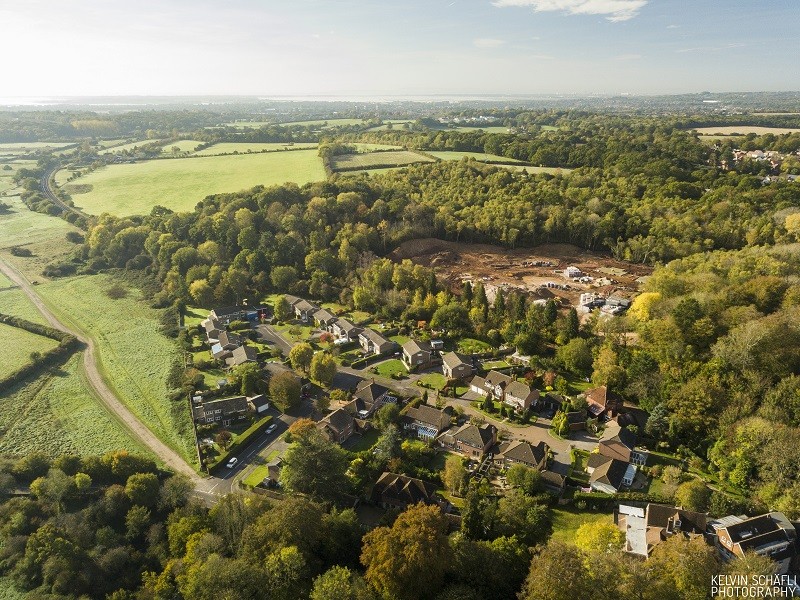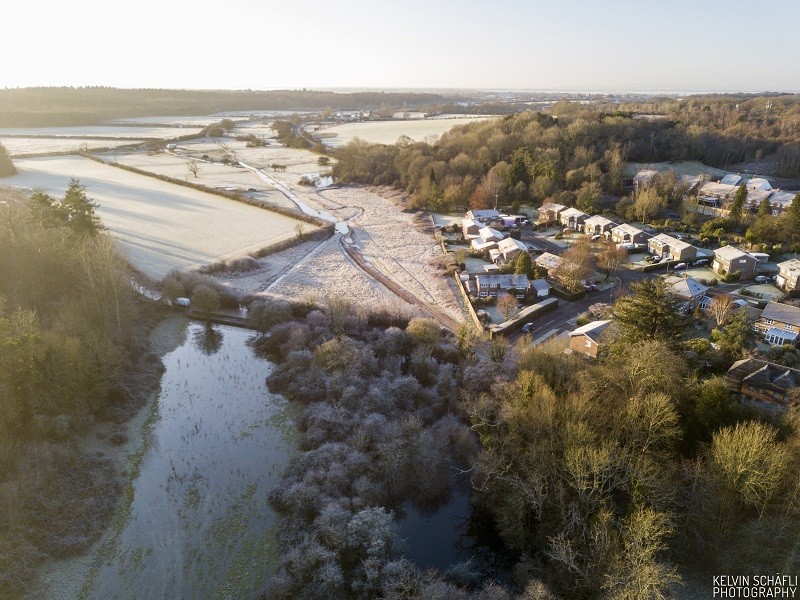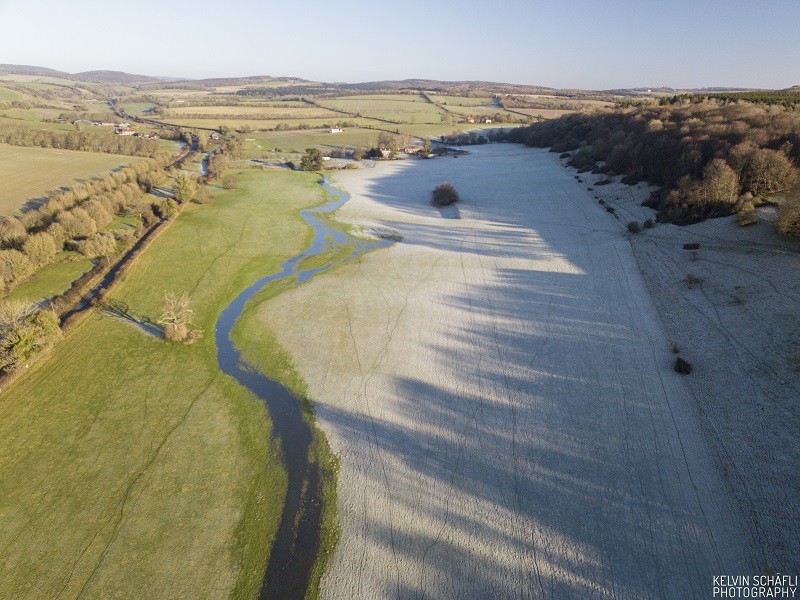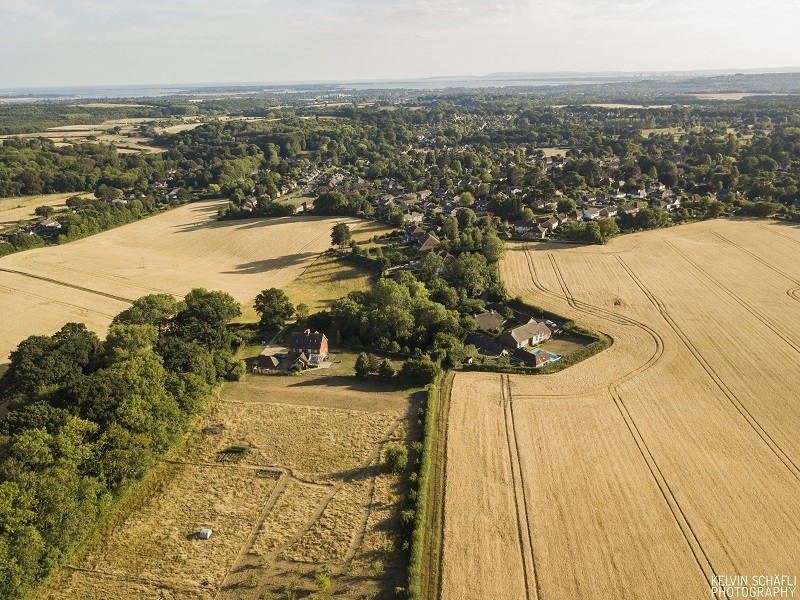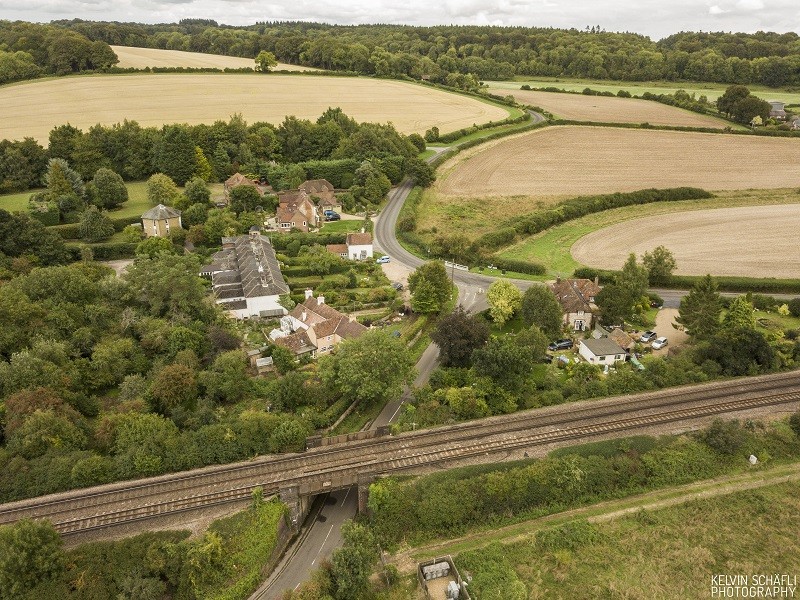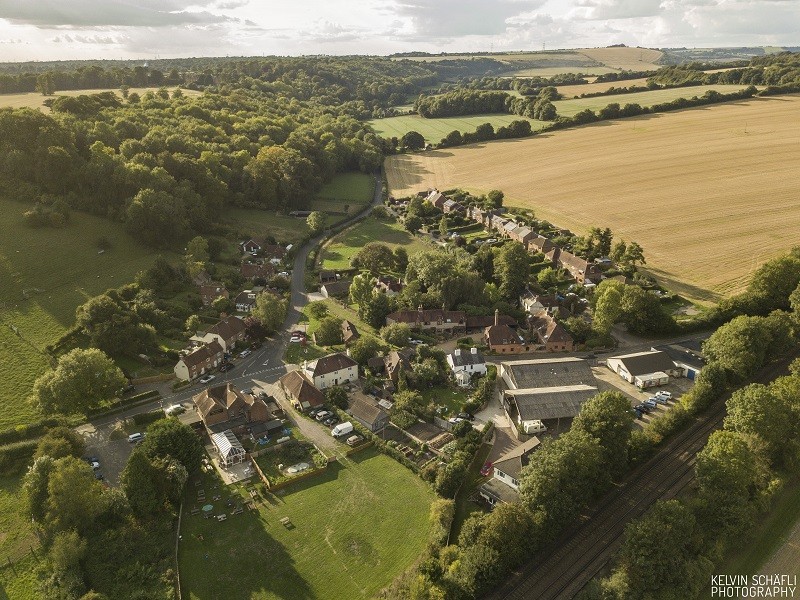
In its periodical Magazine, the RCA aptly calls Rowlands Castle: ‘Village and Valley’. This describes the two dominant characteristics of the area. The aerial photos of Rowlands Castle offer a perspective of both Village and Valley which not only highlights some of its local characteristics – buildings, open spaces and woodlands – but also allows it to be viewed in a wider context in relation to the foothills of the South Downs in the north, and to Portsmouth, The Solent and Isle of Wight to the south.
This display commences from the The Green– a listed ‘Conservation Area’ and centre of Village. It then looks southwards, before moving northwards up the Lavant valley.
One striking aspect is the surprisingly green and wooded character of the area, including among the houses themselves. This relates both to the ancient Forest of Bere – on clays and gravels – which once extended westward almost a far as Winchester (a sort of hunting forest for Portsmouth, as the New Forest remains for Southampton). On the chalklands to the north, there are arable fields, usually laced with flints, with low valleys of the East and West Lavants, passing through gently rolling hills. The topographical and geographical nature of the area is described in more detail in the Rowlands Castle Local Landscape Character Assessment published in 2012.
The Green with occasional balloons
The Green a ‘Conservation Area’
Railway Station, built in 1859
The Green with Lavant Valley to east
The Recreation Ground looking west
The Recreation Ground looking south, across The Green, towards Stansted
The Recreation Ground, looking westward across to the Golf Course
Sunrise from over the Recreation Ground, looking east
Looking across Glendale and railway to brickworks site with building work started on ‘The Glade’. Trees on part of the castle mound to right
Lavant flooding downstream, south below Glendal
Looking north along the valley of The Lavant, straightened into a ditch, towards Dean Lane End parallel with Finchdean Road and the railway
Looking north up valley, Lavant flowing
Sunrise looking east along the Main Avenue towards Stansted House
Looking south over Village, along the Sussex Border path, over Wellsworth Farm with the Solent and Isle of Wight in the distance
Dean Lane End (West Sussex) from the west, built for workers for Canning’s Iron Foundry
The hamlet of Finchdean from the west, note chimney of the former Iron Foundry and industrial area
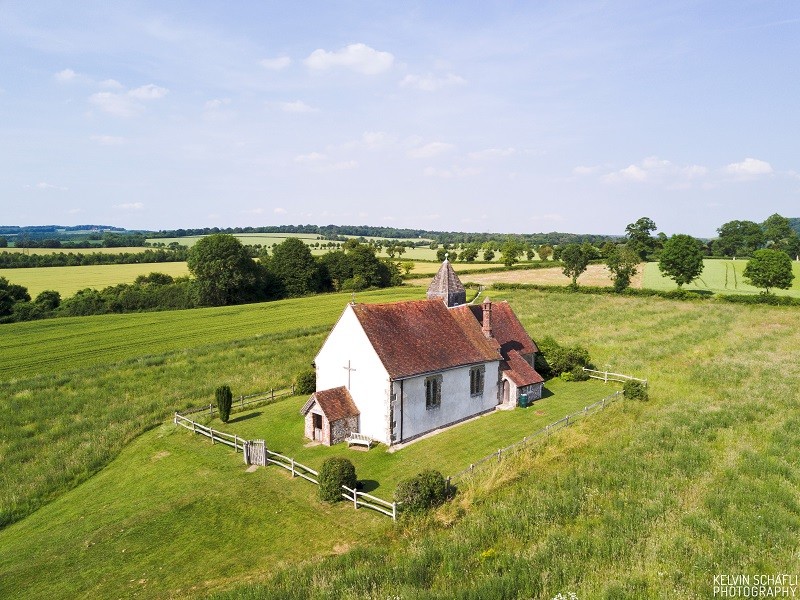
St Hubert’s Saxon Chapel, Old Idsworth, up the East Lavant from Finchdean
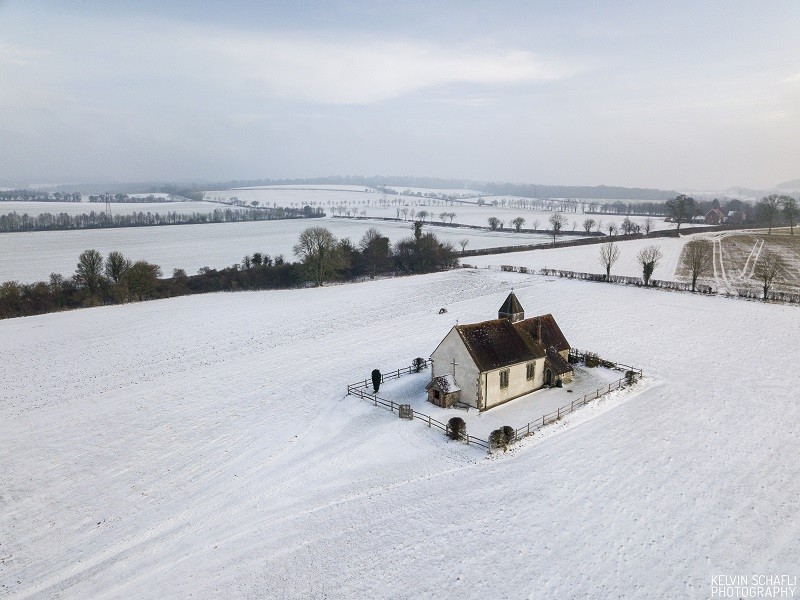
St Hubert’s Chapel in the winter
East Lavant flowing below St Hubert’s
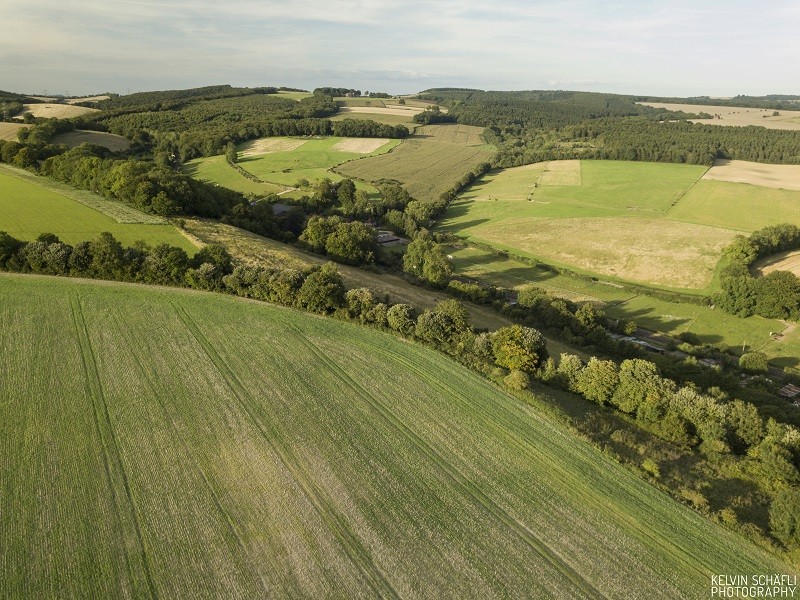
Further up the valley into the Downs, east from near Chalton railway bridge
Top of the East Lavant valley looking east, with defunct chalk quarry (scraped for agricultural chalk)
Cookie Consent
We use cookies to improve your experience on our site. By using our site, you consent to cookies.
Cookie Preferences
Manage your cookie preferences below:
Essential cookies enable basic functions and are necessary for the proper function of the website.
Name
Description
Duration
Cookie Preferences
This cookie is used to store the user's cookie consent preferences.
30 days
Cookie Preferences
This cookie is used to store the user's cookie consent preferences.
30 days
These cookies are needed for adding comments on this website.
Name
Description
Duration
comment_author
Used to track the user across multiple sessions.
Session
comment_author_email
Used to track the user across multiple sessions.
Session
comment_author_url
Used to track the user across multiple sessions.
Session
Statistics cookies collect information anonymously. This information helps us understand how visitors use our website.
Google Analytics is a powerful tool that tracks and analyzes website traffic for informed marketing decisions.
Used only with old Urchin versions of Google Analytics and not with GA.js. Was used to distinguish between new sessions and visits at the end of a session.
End of session (browser)
__utmz
Contains information about the traffic source or campaign that directed user to the website. The cookie is set when the GA.js javascript is loaded and updated when data is sent to the Google Anaytics server
6 months after last activity
__utmv
Contains custom information set by the web developer via the _setCustomVar method in Google Analytics. This cookie is updated every time new data is sent to the Google Analytics server.
2 years after last activity
__utmx
Used to determine whether a user is included in an A / B or Multivariate test.
18 months
_ga
ID used to identify users
2 years
_gali
Used by Google Analytics to determine which links on a page are being clicked
30 seconds
_ga_
ID used to identify users
2 years
_gid
ID used to identify users for 24 hours after last activity
24 hours
_gat
Used to monitor number of Google Analytics server requests when using Google Tag Manager
1 minute
_gac_
Contains information related to marketing campaigns of the user. These are shared with Google AdWords / Google Ads when the Google Ads and Google Analytics accounts are linked together.
90 days
__utma
ID used to identify users and sessions
2 years after last activity
__utmt
Used to monitor number of Google Analytics server requests
10 minutes
__utmb
Used to distinguish new sessions and visits. This cookie is set when the GA.js javascript library is loaded and there is no existing __utmb cookie. The cookie is updated every time data is sent to the Google Analytics server.
30 minutes after last activity
Marketing cookies are used to follow visitors to websites. The intention is to show ads that are relevant and engaging to the individual user.
Google Maps is a web mapping service providing satellite imagery, real-time navigation, and location-based information.